




Book online
Choose the service you need and complete a short intake. No referral is needed.
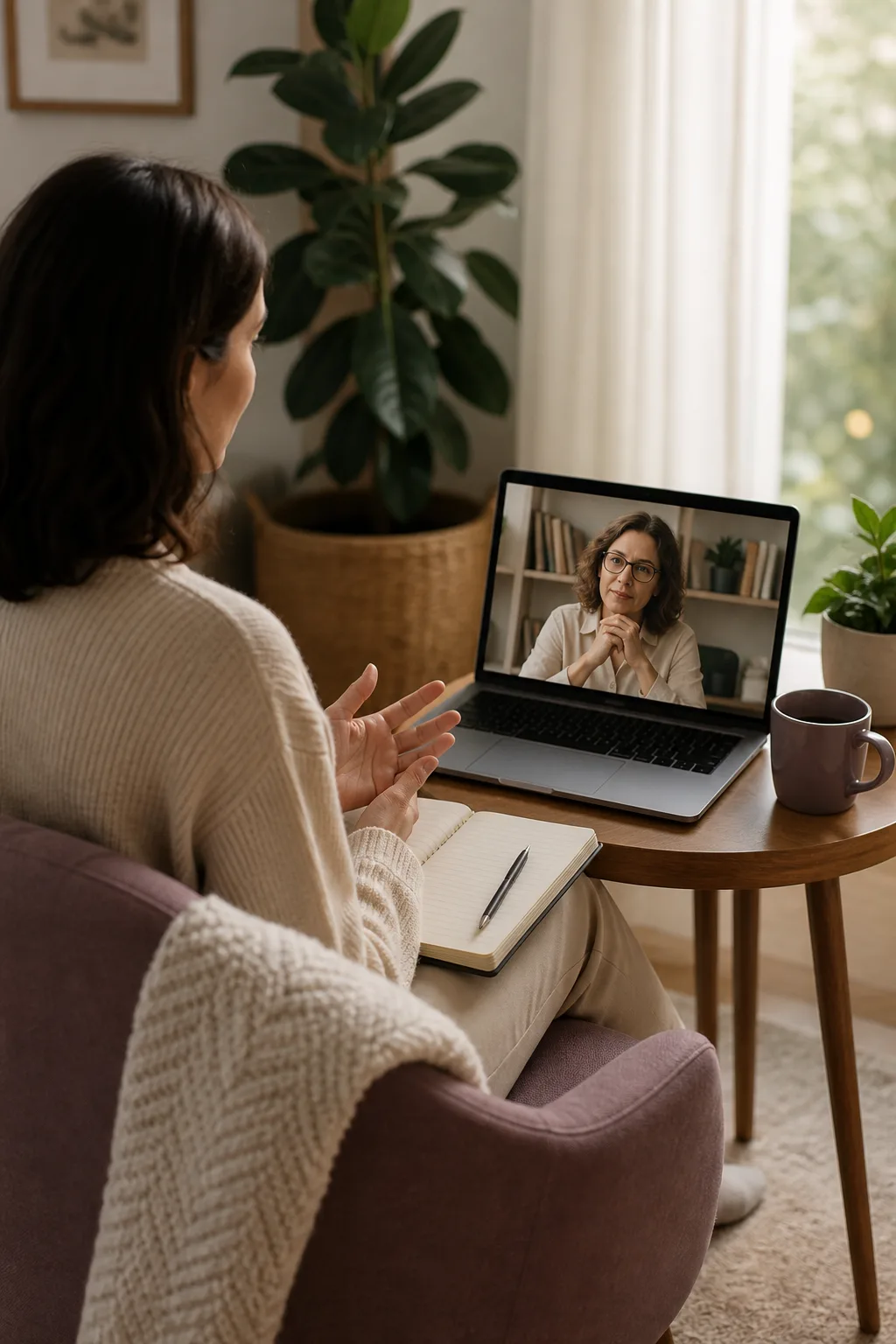
A face that flushes easily, stays red or breaks out in small bumps may be rosacea. Edmonton residents can talk it through with a Canadian licensed doctor by secure video, and the visit is free with an active Alberta Health Card. Without an active card, the fee is $80. The doctor can suggest treatment, help you pin down triggers and refer you when needed.
Book Your Appointment NowFree with an active Alberta Health Card · $80 without · shown before payment
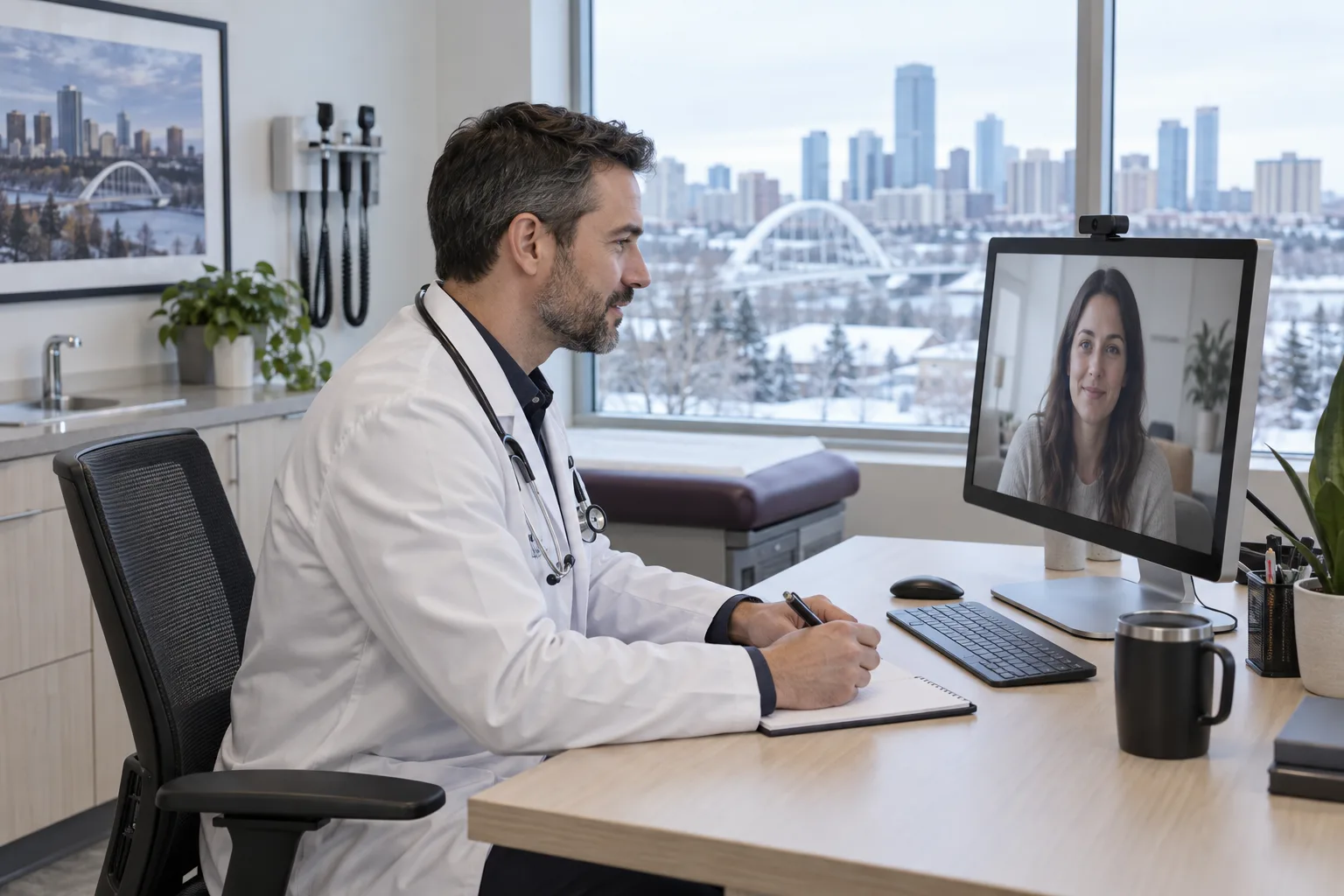
Rosacea is a long-term inflammatory skin condition that mainly affects the face and can involve the eyes. TelePlus Care offers virtual rosacea visits in Edmonton every day, 8 AM to 7 PM Mountain Time. A Canadian licensed doctor can recommend skin care, prescribe when appropriate, and refer you for dermatology, eye care, or laser and light treatments.
Clinical content is reviewed for accuracy and scope. TelePlus Care appointments go ahead only when a doctor agrees it is the right call, after a real assessment, and the doctor will explain the next step if virtual care is not the right fit.
Rosacea's red bumps can resemble acne, which is one reason an assessment helps. The Canadian Dermatology Association explains that rosacea usually begins with flushing that comes and goes, and over time redness may stay. The doctor will ask how your symptoms started and look for signs like these:
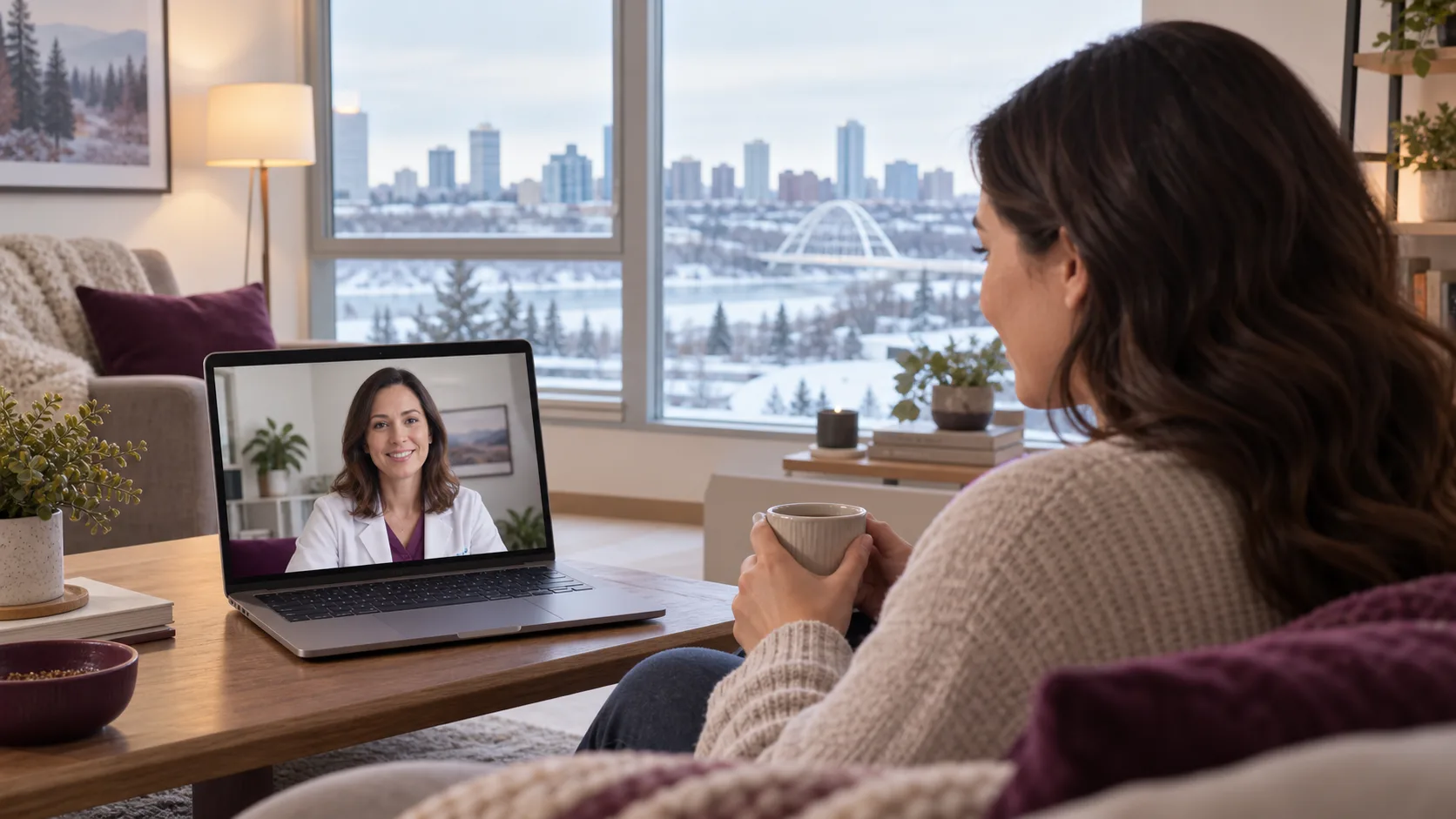
With an active Alberta Health Card, your rosacea visit with TelePlus Care is free. Without one, you'll pay $80. That fee covers the assessment and the doctor's recommendations. Creams, gels and pills are bought at your pharmacy, where drug coverage may help. Laser and intense pulsed light treatments happen at in-person clinics, and any cost is set by that clinic rather than by TelePlus Care. If your rosacea is steady and you only need the same prescription again, the refill service is booked separately, free with an active card or $50 without.
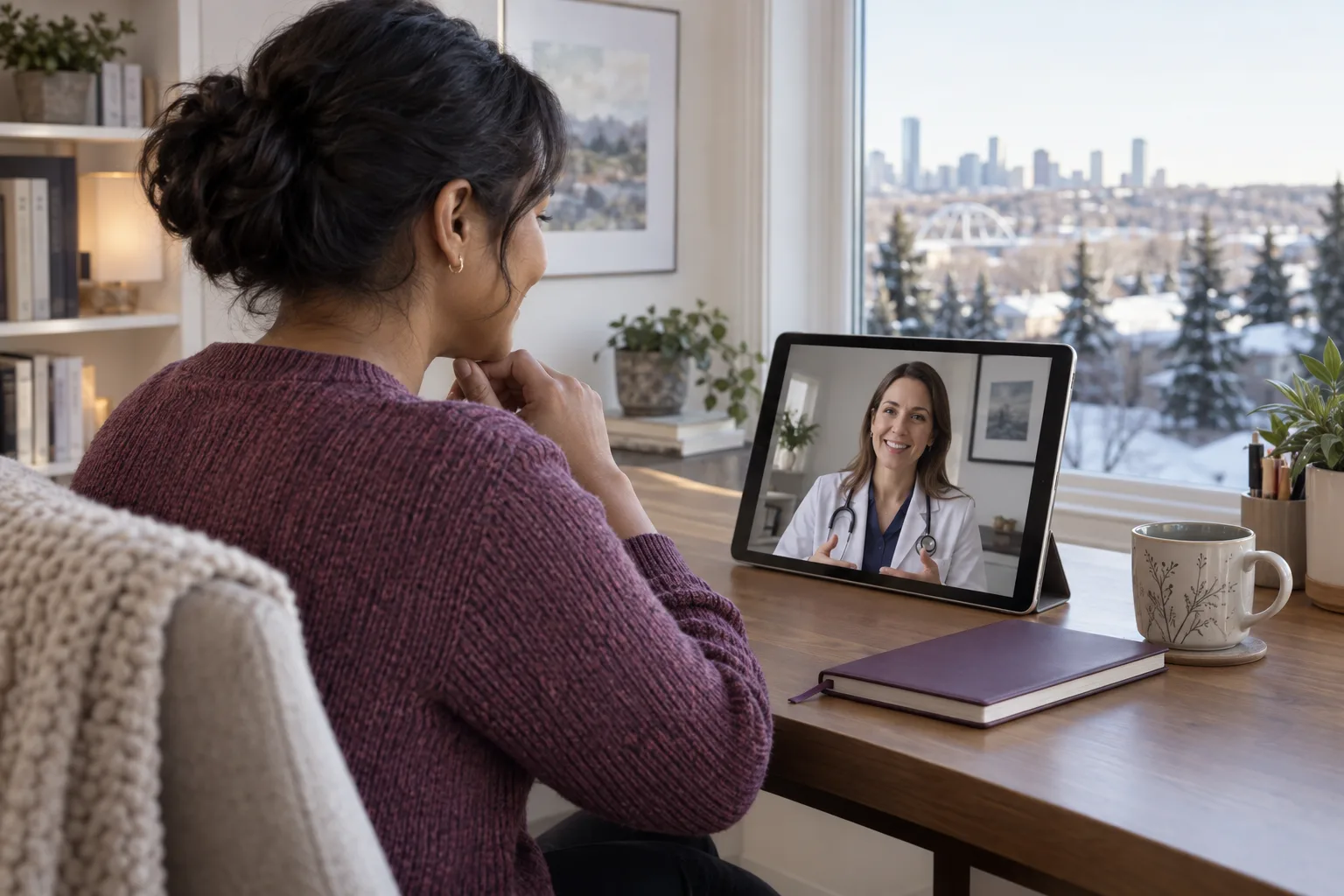
Triggers differ from person to person, which is why MyHealth Alberta suggests keeping a diary of what you ate, drank and did on days your rosacea showed up. For sun, it recommends a wide-brimmed hat and sunscreen rated SPF 30 or higher. Commonly reported triggers include:
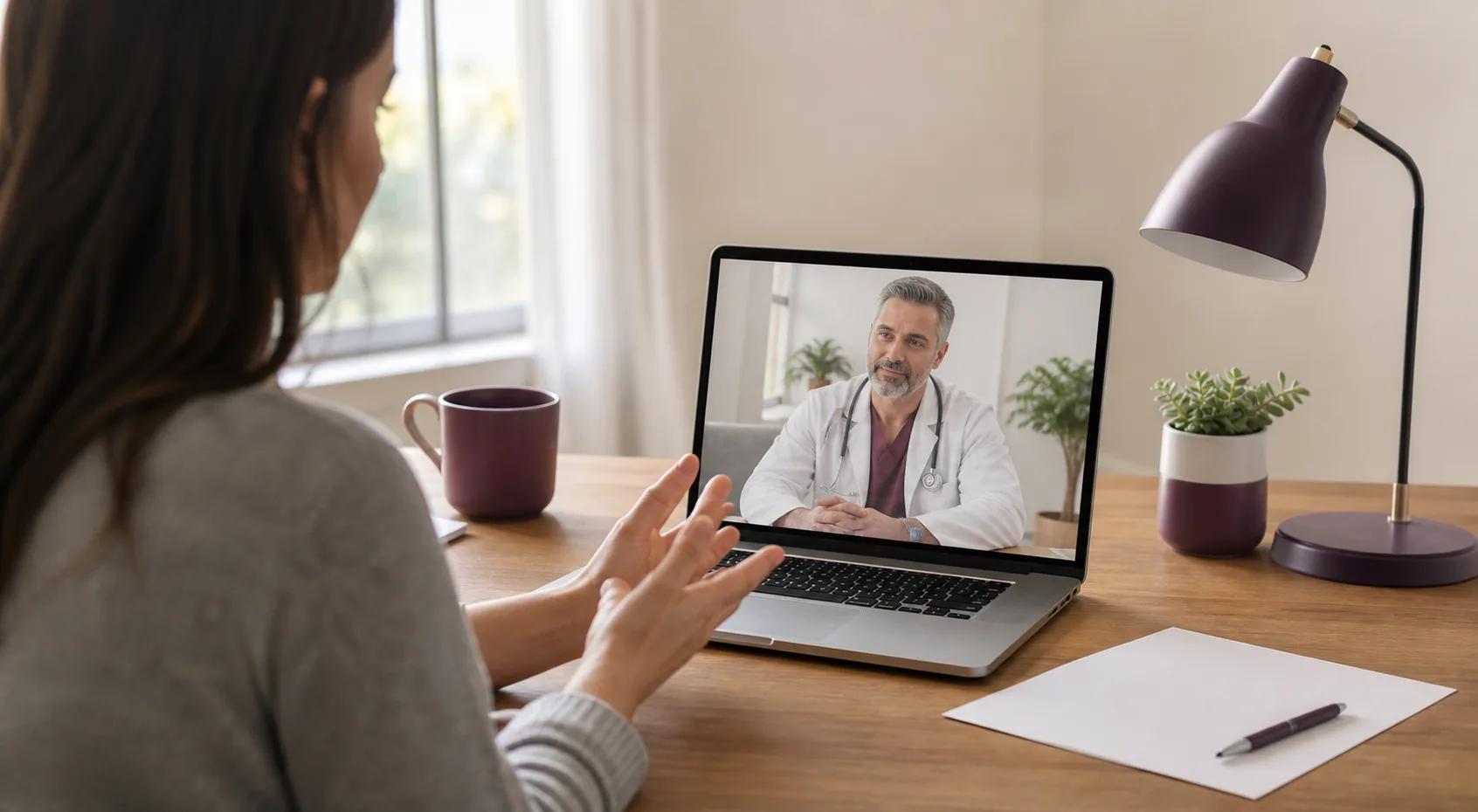
Rosacea is long-term, but the Canadian Dermatology Association says it can be controlled, and that untreated rosacea can worsen over time. Depending on your symptoms, the doctor may talk about gentle skin care and sun protection, medicated creams or gels, or a low-dose oral antibiotic, all options described by MyHealth Alberta. Lasting redness and visible vessels may respond to laser or intense pulsed light, which is done in person. The choice depends on your skin, other health conditions, current medicines, and pregnancy or breastfeeding, so a specific product can't be promised. Let the doctor know if a treatment stings, burns or doesn't seem to help.
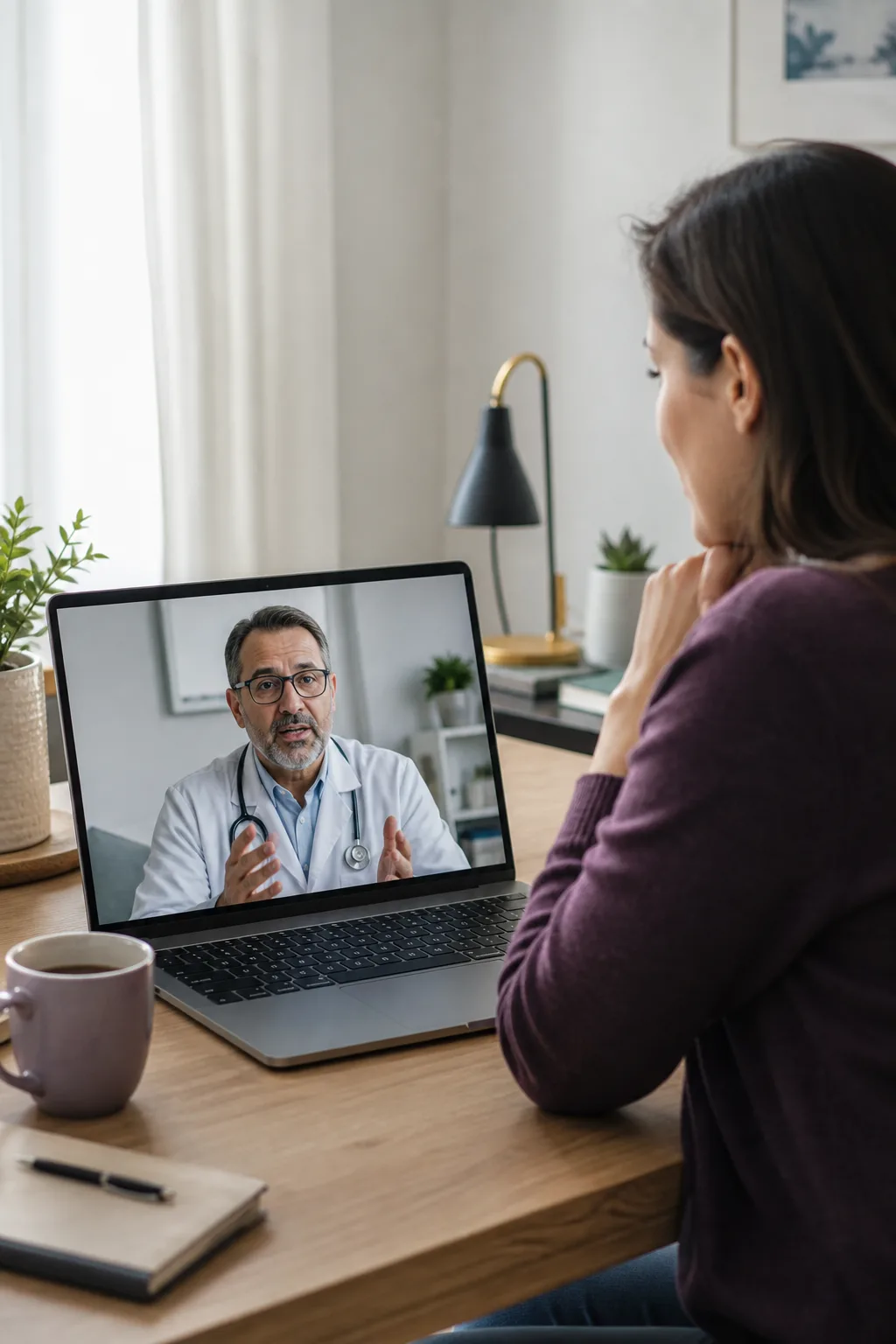
Rosacea can affect the eyes as well as the skin. Watch for eyes that feel gritty, dry or burning, look bloodshot, or have itchy, flaky eyelids. MyHealth Alberta's self-care advice includes placing a warm, wet cloth over the eyelids several times a day, gently washing the lids with a face cloth or a drugstore eyelid cleanser, and using artificial tears for dryness. Some people need prescription eye drops. Mention any eye symptoms during your visit, even if your skin is the main worry. Eye pain or a change in your vision should be checked in person without delay.
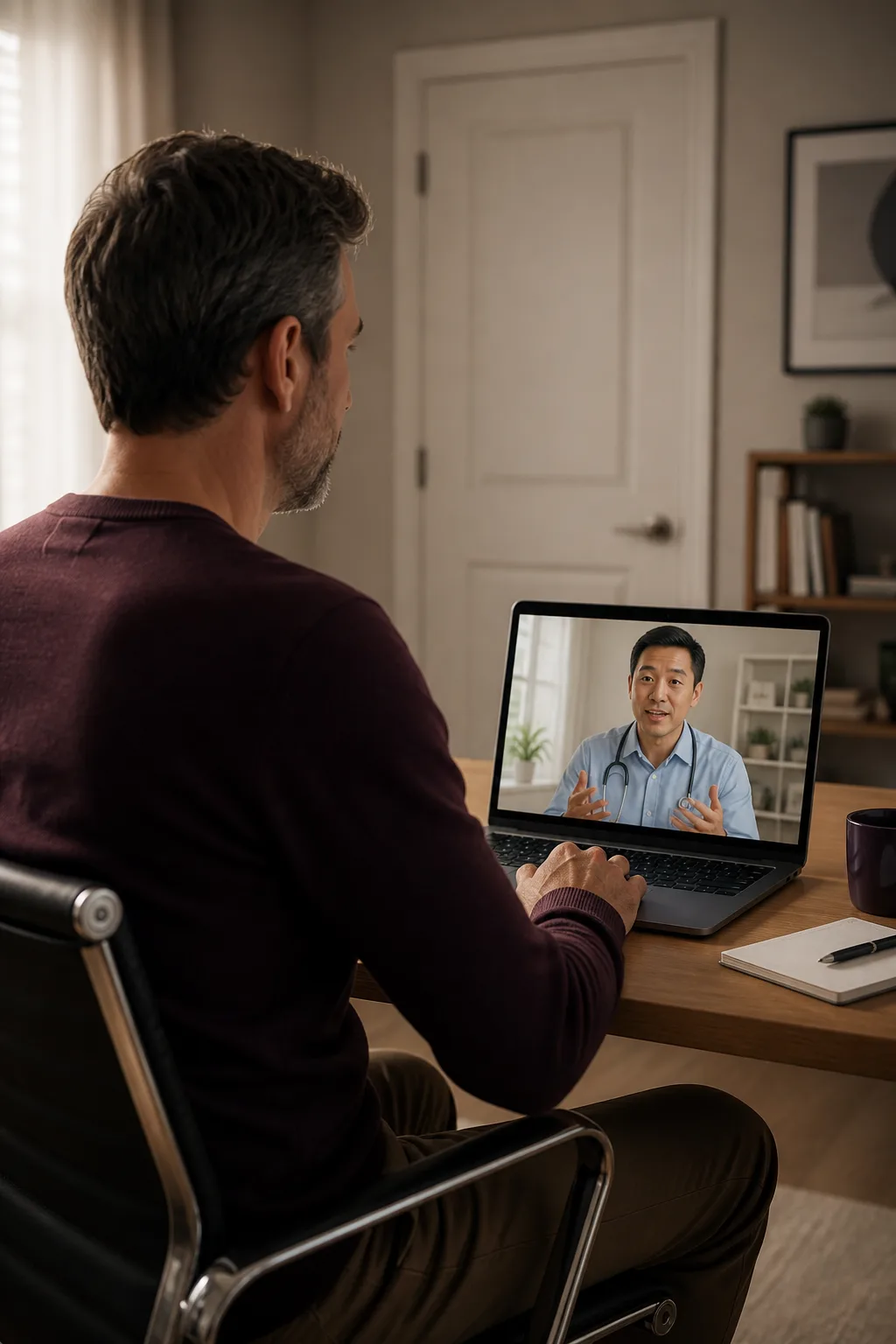
Flushing has often faded by the time an appointment starts, so photos can show the doctor what a flare really looks like. Take one picture during a flare and another on a calmer day. Face a window in natural light, with no makeup and no fresh moisturizer. Include your whole face from the front plus each side, then a closer shot of any bumps or visible vessels. Skip a hot shower right before your visit or your photos, since heat can bring on redness. Warm indoor bulbs and beauty filters change how skin colour looks, so switch filters off.
The doctor may suggest a dermatologist referral if skin is thickening, symptoms carry on despite treatment, laser or light treatment could help, or the diagnosis isn't clear. Specialist wait times are handled by the receiving office, not TelePlus Care. Some symptoms need urgent attention instead: call 911 for facial swelling with trouble breathing, and go to an emergency department for painful, rapidly spreading redness or swelling with a fever. In Edmonton, the Royal Alexandra Hospital, University of Alberta Hospital, Grey Nuns and Misericordia run 24-hour emergency departments. Health Link 811 can help you decide where to go.
Connect with a licensed healthcare provider from the comfort of your home. No referral needed — book your virtual appointment today.
Book Your Appointment NowTelePlus Care is not an urgent care clinic. If you have an emergency, please call 911 or go to the nearest urgent care facility.
TelePlus Care connects patients in Edmonton and other Alberta communities including Fort McMurray, Fort Saskatchewan, Grande Prairie, and Hay Lakes with Canadian licensed doctors by phone or secure video — often the same day.
You are seen by a Canadian licensed doctor authorized by the College of Physicians and Surgeons of Alberta (CPSA) to care for patients in Alberta.
Health care in Alberta is administered through Alberta Health Care Insurance Plan. Online doctor visits are free with an active Alberta Health Card; without an active card the visit is $80.
For free, publicly funded non-urgent health advice in Alberta, you can also call Health Link (811).
Online care is not for emergencies. For severe or rapidly worsening symptoms, call 911 or go to your nearest emergency department.
Choose the service you need and complete a short intake. No referral is needed.
Speak with a Canadian licensed doctor by phone or secure video, daily from 8:00 AM to 7:00 PM Mountain Time.
When clinically appropriate, you can receive a prescription, a note, a lab requisition, or a referral.
Virtual care is not for emergencies. Call 911 for an emergency, or 811 for free nurse advice.
Want to hear from patients? Read TelePlus Care reviews on Google
Medical Disclaimer: The information on this website is for general informational purposes only and does not constitute medical advice. Always consult with a qualified healthcare provider before making any health-related decisions. If you are experiencing a medical emergency, call 911 immediately.
Find us in Edmonton, Alberta