





Book online
Choose the service you need and complete a short intake. No referral is needed.
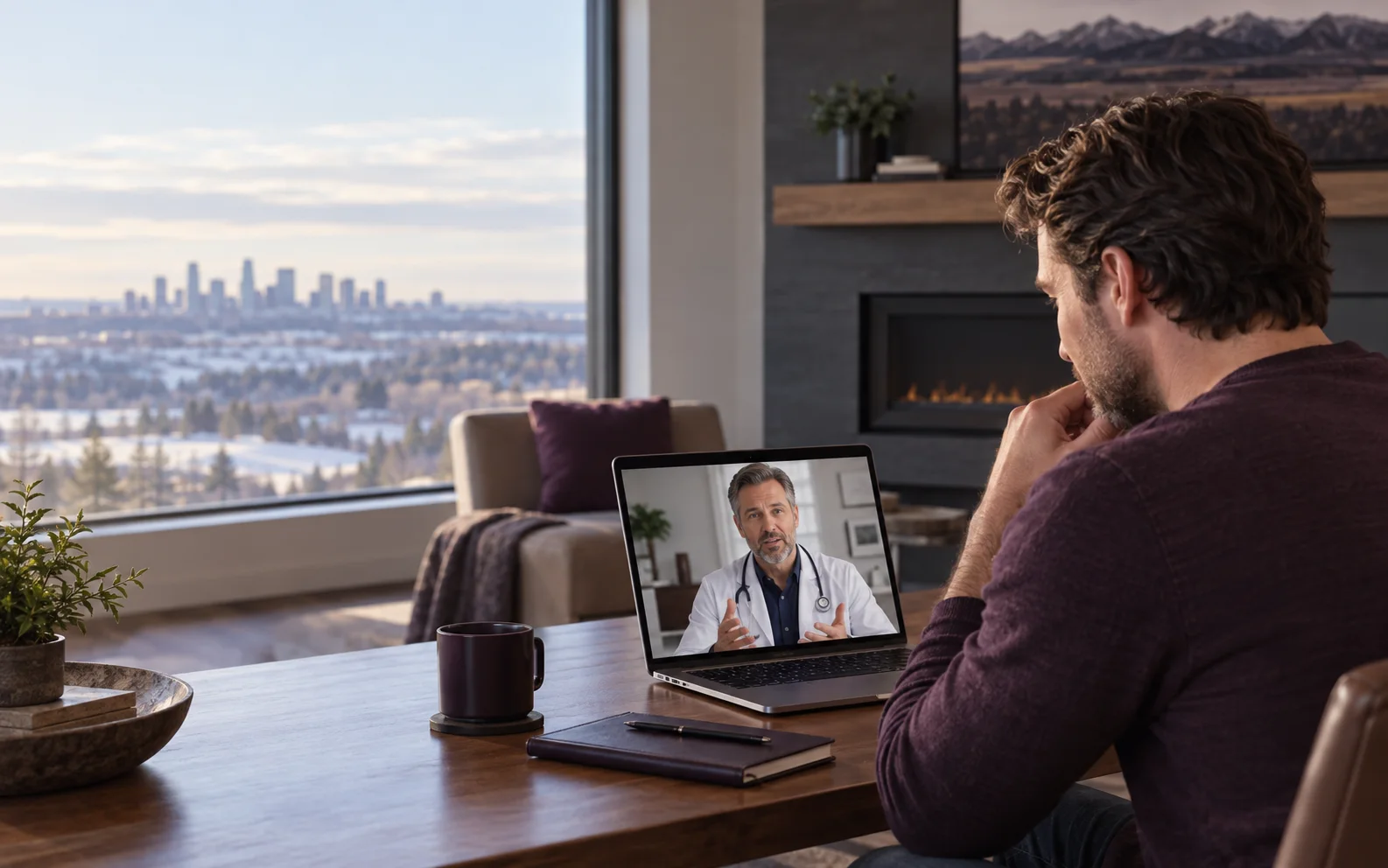
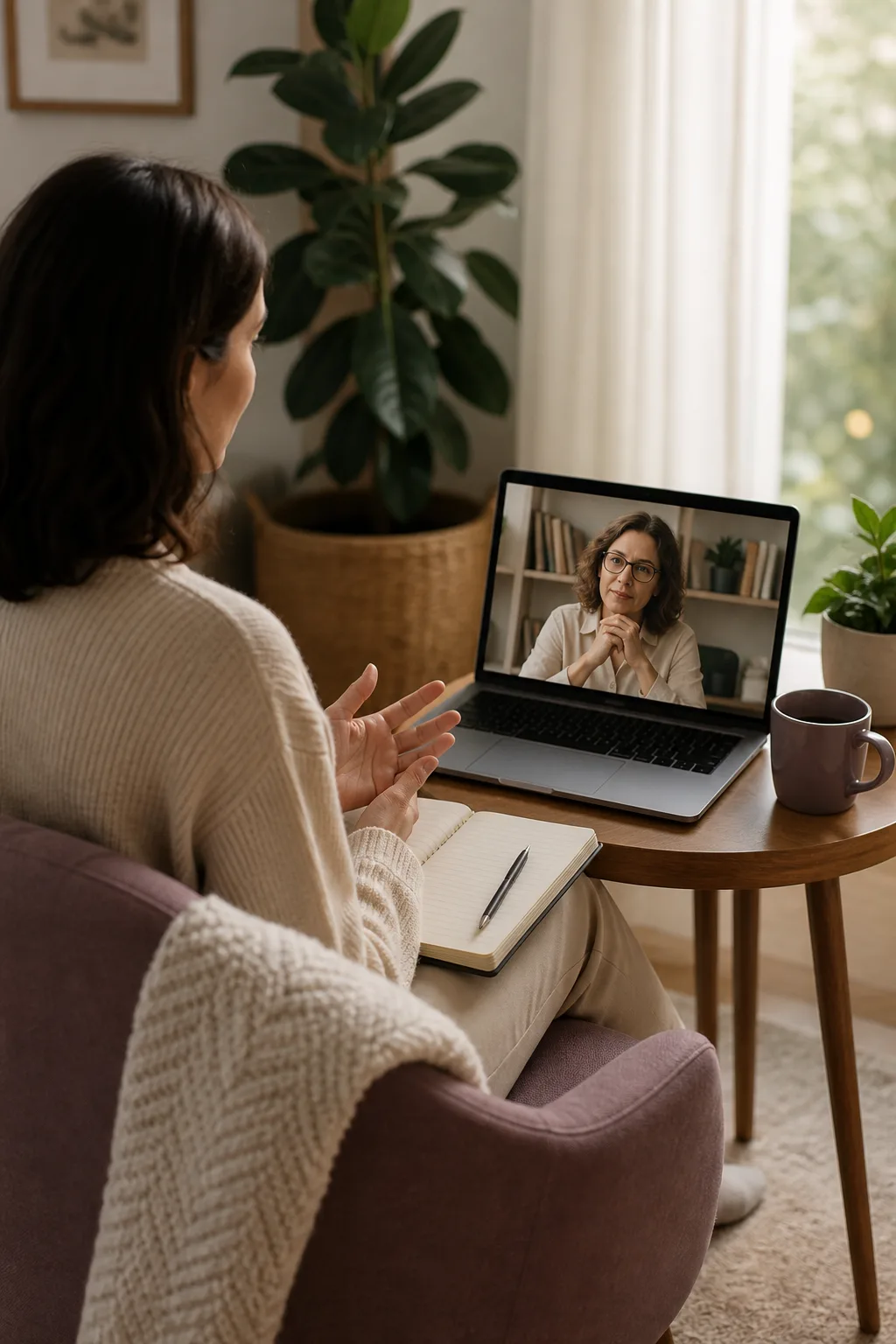
Thick, scaly patches on your elbows, knees or scalp can be assessed by video with a Canadian licensed doctor, free with an active Alberta Health Card. If your card isn't active, the visit is $80. The doctor looks at the pattern, asks about triggers and any joint pain, and suggests a plan that may include prescription treatment, monitoring or a dermatologist referral.
Book Your Appointment NowFree with an active Alberta Health Card · $80 without · shown before payment
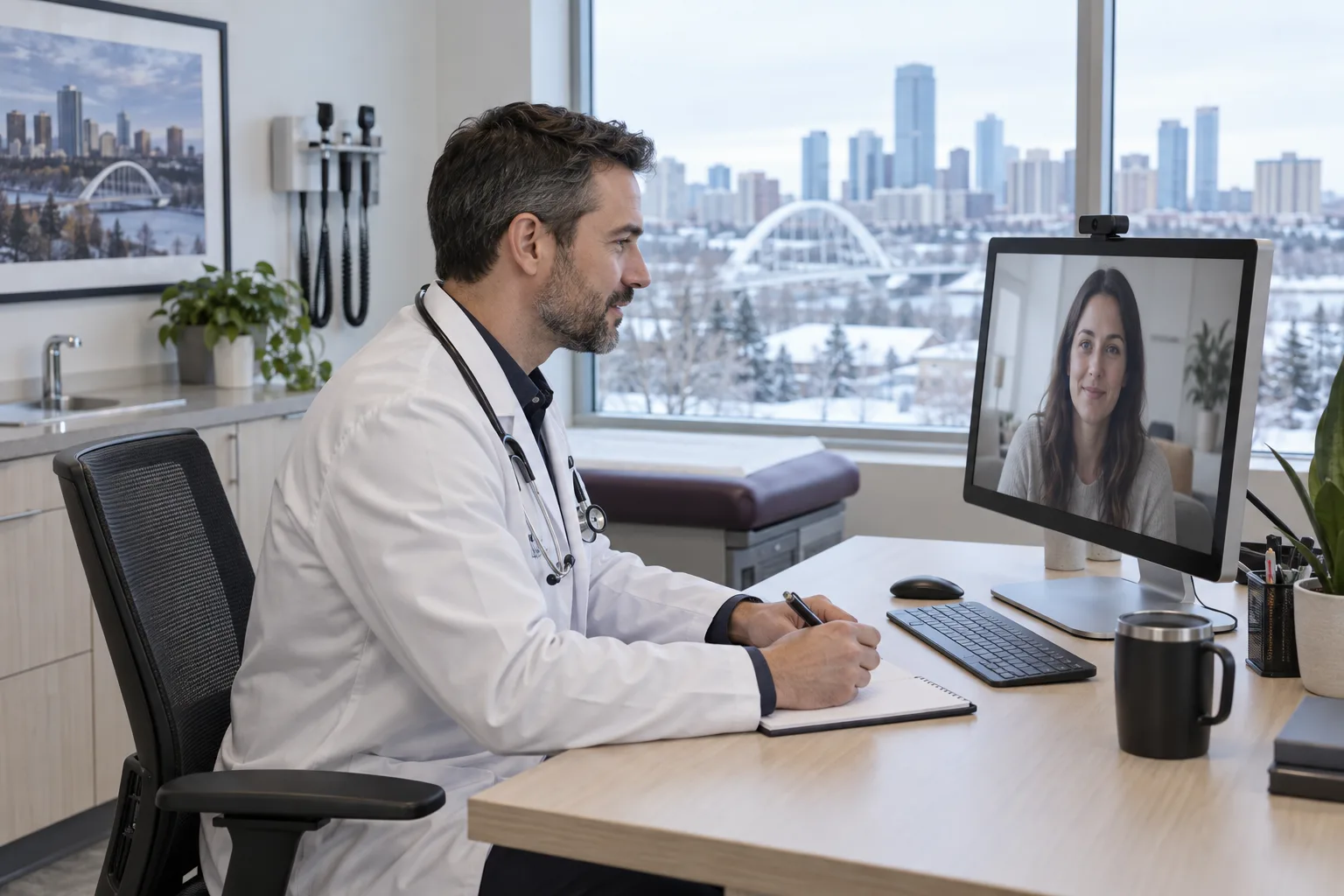
Psoriasis is a long-lasting inflammatory skin condition that is not contagious and often flares and settles. TelePlus Care offers virtual psoriasis visits to Edmonton residents daily from 8 AM to 7 PM Mountain Time. The doctor can help manage many flares and refers people who may need light therapy, biologic medicines or closer specialist monitoring.
Clinical content is reviewed for accuracy and scope. TelePlus Care appointments go ahead only when a doctor agrees it is the right call, after a real assessment, and the doctor will explain the next step if virtual care is not the right fit.
If your Alberta Health Card is active, your TelePlus Care psoriasis visit costs nothing. If it isn't, the fee is $80. The visit covers the doctor's assessment, advice and treatment plan; prescribed creams, shampoos or pills are paid for at the pharmacy, where your drug coverage may apply. Once you're on a stable plan, a prescription refill can be booked as a separate service, free with an active card or $50 without. The doctor decides whether a straight refill is safe or whether your psoriasis needs a fuller review first.

Psoriasis keeps its own schedule, but certain things are known to set off flares. Keep this list in mind through an Edmonton winter and during stressful stretches. If you suspect a prescribed medicine is making your skin worse, ask the doctor before stopping it. The Canadian Dermatology Association and MyHealth Alberta point to:
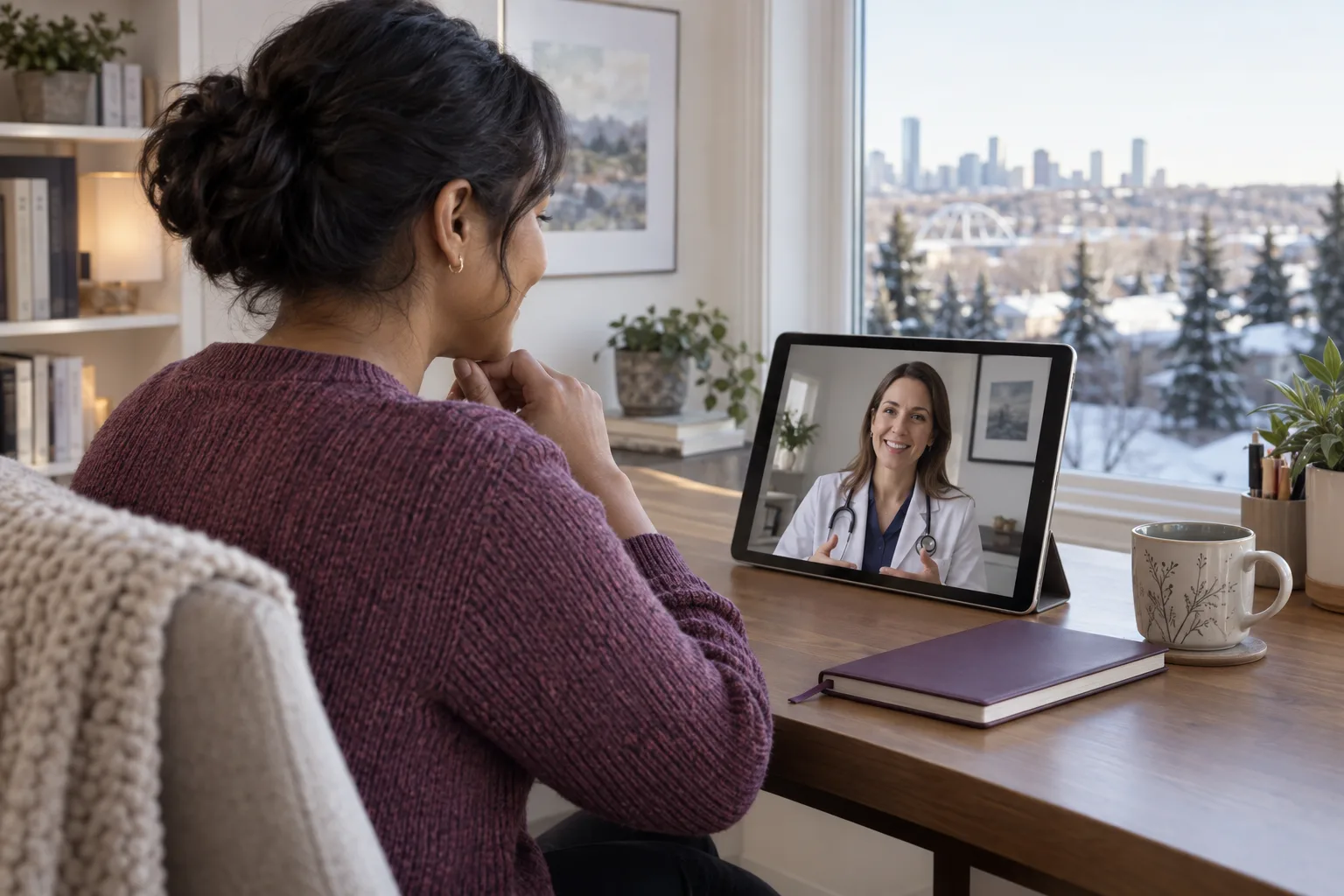
Psoriasis doesn't always stay in the skin. Some people develop psoriatic arthritis, which causes joint swelling, tenderness, stiffness and pain. According to the Canadian Dermatology Association, skin and joint symptoms don't necessarily appear together, so mention sore or stiff joints even when your plaques are quiet. The doctor may order blood tests or X-rays to look for other causes, giving you a requisition for a community lab collection site or imaging clinic, and may recommend further assessment. Joint symptoms are one reason psoriasis care is about more than a skin cream.

Treatment depends on how much skin is involved, where the plaques are, your other health conditions and what you've already tried. MyHealth Alberta describes several levels of care, listed below. The doctor can talk through which may fit you, but no specific medicine is guaranteed. Methotrexate needs regular blood tests to check the liver and blood counts, and the stronger options often involve a dermatologist.

Psoriasis often shows up in places that are awkward to film, so a little planning helps. Photograph your scalp, nails, elbows or lower back beforehand in good daylight, and ask someone to help with the back of your head. Hold the phone straight on rather than at an angle. Avoid picking at scales or putting on thick ointment right before the call, so the doctor sees your skin as it normally looks. Have a list of every treatment you've used, for how long, and what happened. Mention any family history of psoriasis and any new medicines.
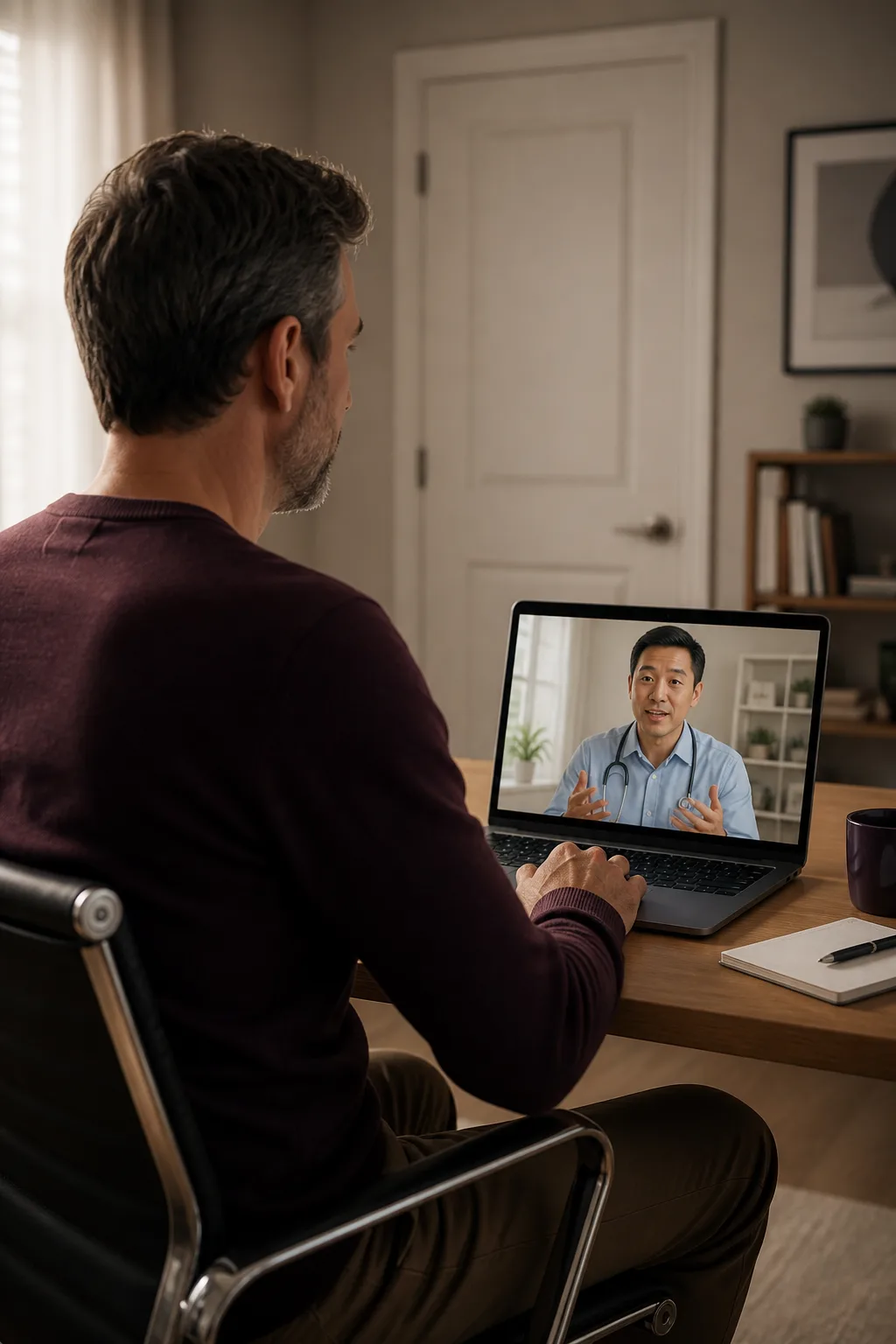
A referral is worth discussing when psoriasis covers large areas, keeps disrupting daily life despite treatment, comes with painful joints, or may need phototherapy, pills or biologics. One Edmonton option is the adult Dermatology Clinic at the Kaye Edmonton Clinic, 11400 University Avenue NW, which lists phototherapy among its services and requires a professional referral. A TelePlus Care doctor can send a referral when it's medically appropriate. The dermatology office sets the appointment date, so wait times are outside TelePlus Care's control. Meanwhile, the doctor can keep adjusting your plan.
Contact a doctor about signs of skin infection, a severe widespread flare with more inflammation than usual, or serious side effects while on treatment, such as vomiting, bloody diarrhea, chills or fever. Red, painful skin spreading over large parts of the body with a fever needs same-day in-person care; Edmonton's 24-hour emergency departments include the University of Alberta Hospital, Royal Alexandra Hospital, Grey Nuns and Misericordia. Call 911 for trouble breathing or facial swelling. Health Link 811 is available day and night for free nurse advice.

Connect with a licensed healthcare provider from the comfort of your home. No referral needed — book your virtual appointment today.
Book Your Appointment NowTelePlus Care is not an urgent care clinic. If you have an emergency, please call 911 or go to the nearest urgent care facility.
TelePlus Care connects patients in Edmonton and other Alberta communities including Fort McMurray, Fort Saskatchewan, Grande Prairie, and Hay Lakes with Canadian licensed doctors by phone or secure video — often the same day.
You are seen by a Canadian licensed doctor authorized by the College of Physicians and Surgeons of Alberta (CPSA) to care for patients in Alberta.
Health care in Alberta is administered through Alberta Health Care Insurance Plan. Online doctor visits are free with an active Alberta Health Card; without an active card the visit is $80.
For free, publicly funded non-urgent health advice in Alberta, you can also call Health Link (811).
Online care is not for emergencies. For severe or rapidly worsening symptoms, call 911 or go to your nearest emergency department.
Choose the service you need and complete a short intake. No referral is needed.
Speak with a Canadian licensed doctor by phone or secure video, daily from 8:00 AM to 7:00 PM Mountain Time.
When clinically appropriate, you can receive a prescription, a note, a lab requisition, or a referral.
Virtual care is not for emergencies. Call 911 for an emergency, or 811 for free nurse advice.
Want to hear from patients? Read TelePlus Care reviews on Google
Medical Disclaimer: The information on this website is for general informational purposes only and does not constitute medical advice. Always consult with a qualified healthcare provider before making any health-related decisions. If you are experiencing a medical emergency, call 911 immediately.
Find us in Edmonton, Alberta