






Book online
Choose the service you need and complete a short intake. No referral is needed.
Three GLP-1 receptor agonist medications dominate the Canadian weight-loss and diabetes conversation in 2026: Ozempic, Wegovy, and Mounjaro. They share an active mechanism but differ in molecule, dosing, Health Canada-approved indication, average weight loss, side-effect profile, and details. This deep comparison breaks down each medication, the clinical-trial evidence, Canadian prescribing steps, safety considerations, and how to switch between them safely under doctor supervision.
Book Weight-Loss Assessment$149 CAD initial assessment · shown before payment

Ozempic and Wegovy both contain semaglutide, while Mounjaro contains tirzepatide — a dual GIP/GLP-1 agonist. As of 2026 in Canada, Health Canada has approved Ozempic for type 2 diabetes (2018), Wegovy for chronic weight management (2021), and Mounjaro for type 2 diabetes (2023). Average weight loss is 12-15% for Ozempic, 15-20% for Wegovy, and 18-22% for Mounjaro across pivotal trials.
Clinical content is reviewed for accuracy and scope. TelePlus Care appointments go ahead only when a doctor agrees it is the right call, after a real assessment, and the doctor will explain the next step if virtual care is not the right fit.
Glucagon-like peptide-1 (GLP-1) is a hormone released by the small intestine after meals. It signals the pancreas to produce insulin, slows the rate at which food empties from the stomach, and acts on the brain's appetite centres to promote satiety. GLP-1 receptor agonists are synthetic peptides that mimic this hormone's effects but persist in the body far longer than the natural version. The class has been used to treat type 2 diabetes for over 15 years; weight-loss applications became prominent after 2017 when high-dose semaglutide produced dramatic results in clinical trials. Mounjaro extends the concept by also activating the GIP receptor, doubling the metabolic targets.

Ozempic is Novo Nordisk's once-weekly subcutaneous semaglutide injection. Health Canada approved it in January 2018 for adults with type 2 diabetes as an adjunct to diet and exercise. Available doses are 0.25 mg, 0.5 mg, 1 mg, and 2 mg, dispensed in pre-filled multi-dose pens. Although Ozempic is not approved by Health Canada specifically for weight management, off-label prescribing for obesity is legal and widespread when clinical criteria are met. The SUSTAIN trial program and the STEP-2 trial have demonstrated 12 to 15 percent average weight loss in patients taking Ozempic at the 1 mg or 2 mg dose for 52 to 68 weeks.

Wegovy is also semaglutide but at a higher maximum dose of 2.4 mg weekly, formulated specifically for chronic weight management. Health Canada approved Wegovy in November 2021 for adults with a body mass index of 30 kg/m squared or greater, or 27 kg/m squared or greater with at least one weight-related comorbidity. In June 2023 Health Canada extended the indication to adolescents aged 12 and older. The pivotal STEP-1 trial showed an average weight loss of 14.9 percent over 68 weeks compared with 2.4 percent for placebo. Wegovy's 2024 SELECT trial also demonstrated a 20 percent reduction in major adverse cardiovascular events in overweight or obese adults with established cardiovascular disease.

Mounjaro is Eli Lilly's once-weekly tirzepatide injection. Health Canada granted Notice of Compliance in November 2023 for adults with type 2 diabetes, with doses of 2.5 mg, 5 mg, 7.5 mg, 10 mg, 12.5 mg, and 15 mg. The breakthrough is that tirzepatide activates both the GLP-1 receptor and the glucose-dependent insulinotropic polypeptide (GIP) receptor — making it a dual incretin agonist. The SURMOUNT-1 trial in adults with obesity showed up to 22.5 percent average body weight loss at the 15 mg dose over 72 weeks. As of 2026, Mounjaro is approved in Canada for type 2 diabetes only, while its weight-loss-indicated counterpart Zepbound has not yet received Health Canada approval at the time of this update — doctors prescribe Mounjaro off-label for weight management when criteria are met.

Knowing exactly what each medication is approved for in Canada matters because it determines pharmacy availability and prescriber comfort. Off-label prescribing is legal but plans rarely support off-label use without strong documentation.
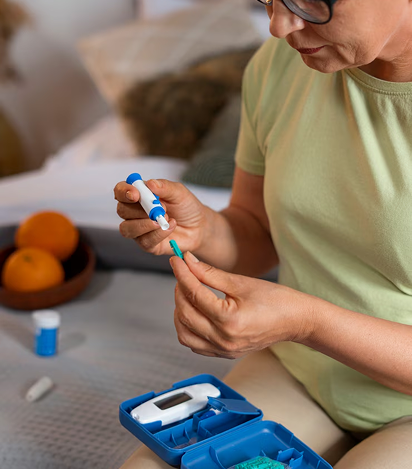
Direct head-to-head trials between all three medications are limited, but pivotal studies allow reasonable comparison. Across these large randomized trials in patients with obesity (with or without type 2 diabetes), tirzepatide consistently produces the greatest weight loss, followed by high-dose semaglutide, with standard-dose semaglutide trailing — though all three substantially outperform placebo and lifestyle interventions alone.
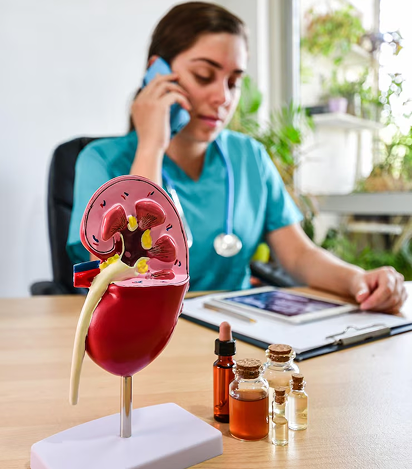
Your intake helps the clinician understand your symptoms, history, and goals before the visit.

access depends on indication, plan, and province. Your doctor reviews medication options, pharmacy steps, and follow-up needs during the appointment. clinical access pathways for weight-management indications is rare across all provinces. Your pharmacist can confirm medication-specific next steps. Always confirm using the DIN: Ozempic 02471477, Wegovy 02525155, Mounjaro 02538419.
All three medications share the GLP-1 side-effect profile because they share much of the same mechanism. Most adverse events are gastrointestinal and most resolve within 8 to 12 weeks as the body adapts. Mounjaro's GIP component does not appear to dramatically increase nausea relative to semaglutide. The frequency of nausea, vomiting, diarrhea, and constipation is generally similar across all three at comparable doses.

The best medication depends on your primary goal, comorbidities, pharmacy availability, and tolerance. There is no universal winner. Use this framework as a starting point for the discussion with your prescriber.

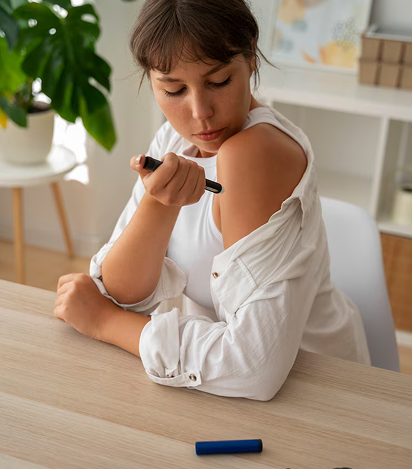
Switching between GLP-1 medications should always be supervised by a doctor. Although the molecules are related, dose equivalence is not exact, and abrupt switches can cause excessive nausea or transient loss of glycemic control. The general approach is to discontinue the current medication for one week (allowing the long half-life to clear), then start the new medication at its standard initiation dose. Physicians titrate up over the following 4 to 16 weeks based on tolerance and response. Patients moving from Ozempic 2 mg to Wegovy 2.4 mg often skip the lowest Wegovy doses; those moving to Mounjaro typically restart at 2.5 mg and titrate normally because of the different mechanism.
After the 2022-2024 shortage of Ozempic and Wegovy, Novo Nordisk dramatically expanded production at its Kalundborg and Clayton facilities, and as of 2026 supply is stable across Canada. Mounjaro had its own brief supply pressure in 2024 as Eli Lilly scaled the Indianapolis and Concord, North Carolina plants; supply normalized by Q1 2025. Health Canada's drug shortages portal (drugshortagescanada.ca) is the authoritative source for real-time status. Compounded versions of semaglutide and tirzepatide are not permitted by Health Canada outside narrow exceptions now that branded products are widely available.

TelePlus Care offers virtual GLP-1 consultations with Canadian licensed doctors. We assess your goals, review your blood work and medical history, discuss medication details that may help your pharmacy, and prescribe the medication that fits your situation — Ozempic, Wegovy, or Mounjaro. Same-day appointments are available, prescriptions can be filled at your chosen pharmacy, and follow-up visits are scheduled to monitor response and adjust dose.

Connect with a licensed healthcare provider from the comfort of your home. No referral needed — book your virtual appointment today.
Book Weight-Loss AssessmentTelePlus Care is not an urgent care clinic. If you have an emergency, please call 911 or go to the nearest urgent care facility.
Choose the service you need and complete a short intake. No referral is needed.
Speak with a Canadian licensed doctor by phone or secure video, daily from 8:00 AM to 7:00 PM Mountain Time.
When clinically appropriate, you can receive a prescription, a note, a lab requisition, or a referral.
Virtual care is not for emergencies. Call 911 for an emergency, or 811 for free nurse advice.
Want to hear from patients? Read TelePlus Care reviews on Google
Medical Disclaimer: The information on this website is for general informational purposes only and does not constitute medical advice. Always consult with a qualified healthcare provider before making any health-related decisions. If you are experiencing a medical emergency, call 911 immediately.
Virtual care across Canada — head office in Edmonton, Alberta