


Book online
Choose the service you need and complete a short intake. No referral is needed.
Breakouts have a way of feeling louder than they look, whether you are heading into a shift downtown, a lecture at the Université de Moncton, or a July weekend on the Northumberland Strait. TelePlus Care connects people across Greater Moncton, from the West End and Sunny Brae to Dieppe, Riverview and out toward Salisbury and Shediac, with a Canadian-licensed doctor by secure video. You upload clear photos of your skin, talk through what you have already tried, and leave with an honest plan, which may include prescription treatment when it is clinically appropriate. Acne is a medical condition, not a hygiene problem, and it improves over weeks and months rather than days. If your skin needs hands-on dermatology care, we will tell you plainly and help you understand the next step rather than stringing you along.
Book Your Appointment Now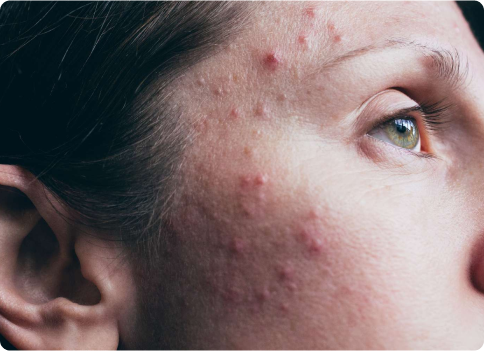
TelePlus Care offers virtual acne assessments for Moncton, Dieppe, Riverview and southeastern New Brunswick. A Canadian-licensed doctor reviews your photos and history by secure video and, when appropriate, can prescribe topical retinoids, benzoyl peroxide, topical antibiotics, oral antibiotics, or hormonal therapy for suitable patients. Isotretinoin is not prescribed here, and severe or scarring acne is referred to dermatology.
Clinical content is reviewed for accuracy and scope. TelePlus Care appointments go ahead only when a doctor agrees it is the right call, after a real assessment, and the doctor will explain the next step if virtual care is not the right fit.
The Hub City runs on shift work, study terms and long commutes across the Petitcodiac, and skin tends to notice. Students at the Université de Moncton, Crandall University and the NBCC and CCNB campuses often come to us mid-semester, when sleep is short and a routine has slipped. Contact-centre and healthcare staff working rotating shifts describe the same pattern. None of this causes acne on its own, but stress, disrupted sleep and inconsistent treatment use can all make an existing tendency harder to control. Local habits matter too. Helmets and chin straps at the rinks, hats and hard-hat liners on job sites, and backpack straps on the Riverfront Trail can all create the friction-and-occlusion pattern sometimes called acne mechanica. Humid Maritime summers mean more sweat sitting on skin, while a Moncton winter of dry indoor heat can leave skin irritated enough that people abandon a retinoid before it has had a chance to work.

Naming the pattern matters, because different types respond to different treatments. Comedonal acne means blackheads and whiteheads with little redness, and usually responds best to a topical retinoid. Inflammatory acne brings red papules and pustules and often needs a retinoid combined with benzoyl peroxide, sometimes with an oral medication added. Nodulocystic acne involves deep, painful lumps that can last weeks and carries the highest risk of permanent scarring, so it is assessed differently and often referred. Hormonal-pattern acne tends to sit along the jaw, chin and neck, may flare in the week before a period, and can respond to hormonal options in suitable patients. Truncal acne on the chest, shoulders and back is common and easy to under-treat. Several conditions imitate acne. Rosacea, perioral dermatitis, folliculitis and hidradenitis suppurativa are all treated differently, and a few are made worse by standard acne therapy. That is one reason clear photographs and a proper history matter more than a quick product recommendation.
The visit is built around seeing your skin properly. Before the appointment you complete a secure intake and upload two or three well-lit photographs, ideally taken in daylight without makeup or filters, showing the front and both sides of the face plus any chest, shoulder or back involvement. Close-ups of a representative area help. During the video call, a Canadian-licensed doctor will ask how long the acne has been present, how it has changed, what over-the-counter or prescription products you have used and for how long, whether you scar or develop dark marks afterwards, what medications and supplements you take, and, where relevant, about menstrual patterns or other signs that point toward a hormonal contribution. Photographs and video have real limits. Lighting flattens texture, and depth is hard to judge on a screen. If the doctor cannot assess your skin confidently, or something in the history does not fit ordinary acne, the honest answer is an in-person examination rather than a prescription.
When the assessment supports it, a Canadian-licensed doctor can prescribe evidence-based acne treatment and send it electronically to a pharmacy near you in Moncton, Dieppe or Riverview. Topical therapy is the backbone for most mild to moderate acne, typically a retinoid such as adapalene or tretinoin, often paired with benzoyl peroxide. Topical antibiotics such as clindamycin may be added, and Canadian guidance generally recommends pairing them with benzoyl peroxide rather than using them alone. Azelaic acid is another option, particularly for sensitive skin or when pigmentation is a concern. For more widespread inflammatory acne, a time-limited course of an oral antibiotic such as doxycycline may be appropriate alongside topical treatment. For suitable patients, hormonal options including certain combined oral contraceptives or spironolactone may be considered, with attention to your medical history, blood pressure, pregnancy plans and any bloodwork the doctor thinks is warranted. Not every option suits every person, and pregnancy or breastfeeding meaningfully changes what is safe.
Isotretinoin, widely known by the brand name Accutane, is highly effective for severe acne, and it is not something we simply prescribe over a video call. It calls for specialist-level oversight, baseline and ongoing bloodwork, careful counselling about side effects, and a strict pregnancy-prevention program because it causes serious birth defects. For most New Brunswick patients that means a dermatology referral, and we will tell you if we think you are a candidate rather than delaying the conversation. We also refer, rather than treat virtually, when acne is severe, cystic or already scarring, when the diagnosis is uncertain, when reasonable first-line and second-line treatment has been used properly for three to six months without adequate improvement, or when scarring needs in-person procedures. Sudden severe acne with fever or joint pain, or a spreading, hot, painful area of skin, needs prompt medical assessment, which in Greater Moncton means your family doctor, Tele-Care 811, or the emergency department at The Moncton Hospital or the Dr. Georges-L.-Dumont University Hospital Centre.
Prescription treatment works best on top of a simple, forgiving routine, and the two things that derail people here are winter irritation and summer over-washing. From November through March, dry indoor heat plus wind off the river leaves the skin barrier fragile, so use a gentle non-foaming cleanser, apply a plain non-comedogenic moisturiser, and consider using a retinoid every second or third night at first, building up as tolerance allows. Applying moisturiser before or after the retinoid can soften the sting. In summer, heat and humidity tempt people into harsh scrubs and astringents, which usually inflame skin rather than settle it. Rinse gently after sweating instead. Sunscreen is genuinely important, not cosmetic. Retinoids, some antibiotics such as doxycycline, and post-inflammatory marks all make sun protection matter more, and a beach day in Shediac or Parlee is exactly the exposure to plan for. A broad-spectrum SPF 30 or higher, reapplied when outdoors, is the practical standard.
Booking takes a few minutes from anywhere with an internet connection, whether you are in Lewisville, Riverview or working out in Salisbury. Complete the secure intake, upload your photos, and meet a Canadian-licensed doctor by video. If a prescription is appropriate, it goes to the pharmacy you choose, whether that is a Jean Coutu, Shoppers Drug Mart, Lawtons, Sobeys or an independent in Dieppe. If bloodwork is warranted, the doctor can arrange a requisition for a Horizon or Vitalité laboratory. Then comes the part nobody enjoys hearing. Acne responds slowly. Expect little visible change in the first month, some improvement by weeks eight to twelve, and continued gains beyond that. Skin sometimes looks worse before it looks better when a retinoid is introduced. Improvement usually means fewer and less angry lesions, not flawless skin, and marks left behind fade over months. Follow-up matters, because plans often need adjusting once we see how your skin actually responds.
Connect with a licensed healthcare provider from the comfort of your home. No referral needed — book your virtual appointment today.
Book Your Appointment NowTelePlus Care is not an urgent care clinic. If you have an emergency, please call 911 or go to the nearest urgent care facility.
TelePlus Care connects patients in Moncton and other New Brunswick communities including Riverview, Saint John, Dieppe, and Edmundston with Canadian licensed doctors by phone or secure video — often the same day.
You are seen by a Canadian licensed doctor authorized by the College of Physicians and Surgeons of New Brunswick (CPSNB) to care for patients in New Brunswick.
Health care in New Brunswick is administered through New Brunswick Medicare. TelePlus Care is a private virtual clinic — your flat-fee visit is not billed to NB Medicare, and no referral, roster, or wait-list is required.
For free, publicly funded non-urgent health advice in New Brunswick, you can also call Tele-Care (811).
Online care is not for emergencies. For severe or rapidly worsening symptoms, call 911 or go to your nearest emergency department.
Choose the service you need and complete a short intake. No referral is needed.
Speak with a Canadian licensed doctor by phone or secure video, daily from 8:00 AM to 7:00 PM Mountain Time.
When clinically appropriate, you can receive a prescription, a note, a lab requisition, or a referral.
Virtual care is not for emergencies. Call 911 for an emergency, or 811 for free nurse advice.
Want to hear from patients? Read TelePlus Care reviews on Google
Medical Disclaimer: The information on this website is for general informational purposes only and does not constitute medical advice. Always consult with a qualified healthcare provider before making any health-related decisions. If you are experiencing a medical emergency, call 911 immediately.
Virtual care for Moncton — head office in Edmonton, Alberta