





Book Your Appointment Now
TelePlus Care

Online Acne Treatment in Halifax, Nova Scotia

Acne has a way of arriving at the worst moment: the week of exams at Dalhousie, the month you start a new job downtown, or the summer your skin refuses to settle in the harbour humidity. TelePlus Care connects people across the Halifax Regional Municipality, from the North End and South End to Clayton Park, Fairview and Spryfield, across the bridges to Dartmouth, Cole Harbour and Eastern Passage, and out through Bedford, Sackville and Tantallon, with a Canadian-licensed doctor by secure video and photo review. Where it is clinically appropriate, that doctor can prescribe topical retinoids, benzoyl peroxide and topical antibiotics, and for suitable patients oral antibiotics or hormonal treatment, then send the prescription to your Halifax-area pharmacy. Acne treatment is slow, honest work, measured in months rather than days, and we will tell you that plainly.

Book Your Appointment Now
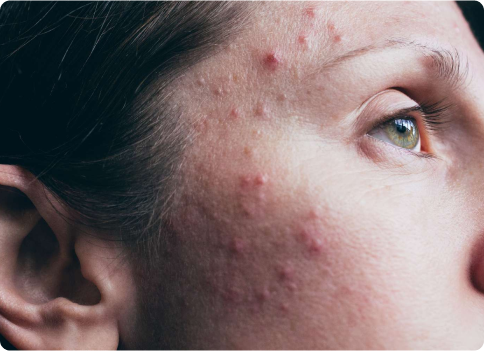
Online acne treatment in Halifax with TelePlus Care
⏱️Same-Day Appointment
👨‍⚕️Licensed Canadian Doctors
🔒PIPEDA Secure & Private
Trusted by 500+ Patients
Quick Answer

TelePlus Care offers online acne visits for Halifax and HRM residents. A Canadian-licensed doctor reviews your photos and history by secure video and, when appropriate, prescribes topical retinoids, benzoyl peroxide, topical antibiotics, or oral antibiotics and hormonal options for suitable patients. Isotretinoin is not prescribed here; severe, cystic or scarring acne is referred for in-person dermatology care.

  • Acne is one of the most common skin conditions in Canada, affecting the large majority of people at some point between the early teens and the mid-twenties, and it often continues into adult life (Canadian Dermatology Association).
  • Topical retinoids, benzoyl peroxide and topical antibiotic combinations are standard first-line treatments for most mild-to-moderate acne; oral antibiotics and hormonal therapy are added for suitable patients after assessment.
  • Isotretinoin (Accutane) is not prescribed through this online service. It requires close supervision, bloodwork before and during treatment, and strict pregnancy-prevention requirements, and is typically managed through dermatology.
  • Acne treatments are judged over weeks to months, commonly at around 8 to 12 weeks, and skin can look worse before it looks better. No treatment can guarantee clear skin.
  • Halifax anchors the Halifax Regional Municipality and hosts Dalhousie, Saint Mary's, Mount Saint Vincent, King's, NSCAD and NSCC campuses alongside large healthcare, military and shipbuilding workforces, all settings where masks, helmets, hard hats and chin straps commonly aggravate acne.
Medically reviewed by Dr. Maher Jerudi, MD
Last reviewed:

Clinical content is reviewed for accuracy and scope. TelePlus Care appointments go ahead only when a doctor agrees it is the right call, after a real assessment, and the doctor will explain the next step if virtual care is not the right fit.

What Halifax Weather, Work and Gear Do to Acne

Halifax skin lives in a maritime climate, and it shows. Summer air off the harbour is heavy and humid, sweat lingers, and the richer moisturiser that felt right in February can feel greasy by August. Then the season turns: nor'easters, salt wind along the waterfront, and months of dry forced-air heat indoors, which is exactly when a new retinoid stings and flakes most. Sun still matters here year-round, even under the fog the city is known for; the Canadian Dermatology Association recommends broad-spectrum SPF 30 or higher daily, and it stops being optional once you are on a retinoid. Then there is what people wear. Hard hats and welding hoods at the Halifax Shipyard, chin straps and webbing at CFB Halifax and Shearwater, masks and face shields on shift at the QEII, hockey helmets in rinks from Sackville to Cole Harbour, and neoprene after a session at Lawrencetown. Friction, heat and occlusion all push acne along.

  • Humid summers and damp harbour fog: sweat and heavier products sit on the skin longer, especially under helmets, caps and collars.
  • Dry indoor heat from November through April: this is when retinoid dryness and irritation peak, and when a plain moisturiser matters most.
  • Acne mechanica from gear: hard hats and coveralls at the shipyard, straps and webbing at CFB Halifax, masks on hospital shifts, backpacks on the Dal and Saint Mary's walk, wetsuits after Lawrencetown or Crystal Crescent.
  • Sunscreen year-round: UV reaches you through Halifax fog and reflects off water and snow, and several acne treatments increase sun sensitivity.
  • Shift work and student schedules: irregular sleep and stress do not cause acne on their own, but they make consistency harder, and consistency is what treatment runs on.
What Halifax Weather, Work and Gear Do to Acne

The Kinds of Acne We See, and the Conditions That Mimic It

Acne is not one thing, and the pattern on your skin shapes the treatment more than the severity alone does. Blackheads across the forehead behave differently from deep, painful lumps along the jaw, and a rash that only looks like acne needs a different plan entirely. Part of the value of a proper assessment is naming what is actually happening, because the wrong label can mean months of a treatment that was never going to work. Pigment matters here too. In deeper skin tones, including in Halifax's long-established African Nova Scotian communities and among newer arrivals to the city, the mark left behind after a spot heals often bothers people more than the spot did, and it can linger for months. That is treatable, but it is treated differently from active acne, and it responds best when the underlying breakouts are calmed first and the skin is protected from sun.

  • Comedonal acne: blackheads and whiteheads, often across the forehead, nose and chin.
  • Inflammatory acne: red papules and pustules on the face, chest, shoulders or back.
  • Nodular or cystic acne: deep, painful lumps that heal slowly and can scar. This pattern usually needs dermatology.
  • Hormonal-pattern acne: jawline, chin and neck breakouts, often flaring before a period, and common well into the twenties, thirties and forties.
  • Acne mechanica: friction and occlusion from helmets, masks, straps and work gear.
  • Post-inflammatory hyperpigmentation and redness: the marks left behind, which often outlast the breakout by months.
  • Look-alikes worth ruling out: rosacea, perioral dermatitis, folliculitis including the yeast-driven kind, razor bumps (pseudofolliculitis barbae), and hidradenitis suppurativa.

What an Online Acne Visit Involves

The visit is straightforward, and most of the useful work happens in the photos and the history. You complete an intake form and upload clear pictures, then meet a Canadian-licensed doctor by secure video from wherever you are, a residence room near Studley campus, a break room in Burnside, or your kitchen table in Bedford. The doctor looks at the pattern and severity, asks what you have already tried and for how long, and screens for the things that change the plan: pregnancy or plans to conceive, menstrual cycle patterns, medications that can trigger breakouts, family history of scarring acne, and how the skin has reacted to past treatments. You then get a written regimen, not just a prescription, because how and when you apply a retinoid matters as much as which one you were given. A follow-up is planned so the plan can be adjusted rather than abandoned.

  • Before the visit: upload three or four photos in natural daylight, front and both sides, plus chest or back if involved, with no makeup and no filters.
  • Bring a list: every wash, cream, supplement and prescription you have tried, roughly how long you used it, and what happened.
  • During the visit: assessment of acne type and severity, screening for look-alike conditions, and a discussion of what is realistic for your skin.
  • After the visit: a written routine plus a prescription sent to the Halifax-area pharmacy you choose.
  • Follow-up: typically reviewed at around 8 to 12 weeks, because that is when most regimens can honestly be judged.
  • Not suitable online: skin that is rapidly worsening, painful and spreading, or accompanied by fever, which needs to be seen in person.

Get Started With Online Acne Treatment in Halifax

Book a virtual appointment with a licensed healthcare provider today.

Book Your Appointment Now

What a Doctor Can Prescribe Online, and What We Will Not

Most mild-to-moderate acne is managed well with treatments that can be prescribed after a careful virtual assessment, and a good regimen usually combines two mechanisms rather than relying on one product. The doctor chooses based on your acne type, your skin's tolerance, pregnancy status, and what has already failed. Oral options are used deliberately and with a plan for stopping, since long open-ended courses of antibiotics are not good practice and resistance is a genuine concern. Hormonal treatment can be a strong option for the jawline pattern in suitable patients, and where it involves monitoring, that monitoring is arranged rather than skipped. Being clear about the limits matters just as much: isotretinoin is not prescribed through this service, and neither are procedural treatments for scarring, which need to be done in person. If your skin needs something we cannot safely provide online, the doctor will say so and point you toward the right care.

  • Topical retinoids such as adapalene or tretinoin, the backbone of most acne regimens.
  • Benzoyl peroxide, on its own or combined with a retinoid or topical antibiotic.
  • Topical antibiotic combinations, generally paired with benzoyl peroxide to limit resistance.
  • Azelaic acid, useful for sensitive skin and for the pigment left behind by old spots.
  • Oral antibiotics such as a tetracycline for suitable patients, as a limited course alongside topical treatment rather than an indefinite fix.
  • Hormonal options for suitable patients, including combined oral contraceptives or, where appropriate, spironolactone with the monitoring it requires.
  • Not prescribed online here: isotretinoin (Accutane). Retinoids and tetracyclines are also avoided in pregnancy, and pregnancy-appropriate alternatives are used instead.

Isotretinoin, Severe Acne, and When You Need Dermatology in Person

Isotretinoin, still widely known as Accutane, is the most effective treatment available for severe nodulocystic acne, and it is also the one that demands the most care. It requires an assessment by a clinician experienced in prescribing it, bloodwork before and during the course, ongoing review, and strict pregnancy prevention, because exposure in pregnancy can cause serious birth defects. That combination is not something a single online visit can responsibly replace, so we do not prescribe it here. What we can do is take severe acne seriously and early. Deep cysts and scarring should not be left to run for a year on treatments that were never strong enough. If your acne looks like an isotretinoin case, the doctor's job is to document severity and everything you have already tried, get appropriate treatment started in the meantime, and support a dermatology referral. Referral waits in Nova Scotia can be long, so that documentation makes the eventual appointment count.

  • Referred for in-person care: deep nodules or cysts, scarring that is already forming, or acne that has not improved after several months of well-used first- and second-line treatment.
  • Referred when the diagnosis is uncertain, or when what looks like acne may be rosacea, folliculitis or something else.
  • Sudden severe acne with irregular periods, unusual hair growth or other hormonal changes deserves an in-person workup.
  • Painful lumps and tunnels in the armpits, groin or under the breasts may be hidradenitis suppurativa rather than acne, and are managed differently.
  • Treatment of established scars, including peels, lasers and microneedling, is a procedural, in-person service.
  • Some Nova Scotia dermatology offices prefer referrals through your own family practice; your doctor will tell you what applies to your situation.

A Simple Skincare Routine That Supports Treatment

Prescriptions work better on a calm, well-cared-for barrier, and the most common reason a good regimen fails is that the skin got too irritated to keep going. Keep it boring: a gentle cleanser twice a day, a plain non-comedogenic moisturiser, sunscreen every morning, and your prescribed treatment at the time of day you were told to use it. Resist the urge to scrub. Grainy exfoliants, strong toners and stacking three actives at once will not speed anything up, and in a Halifax February they will leave your face raw. If a retinoid is stinging, moisturiser first and shorter contact time is usually enough to get through the adjustment weeks. Picking is the habit worth breaking above all others, since squeezing a deep spot is a reliable way to trade a few weeks of a pimple for months of a mark or a permanent scar.

  • Cleanse gently twice daily, and rinse off sweat and salt after a shift, a rink, a paddle at Lake Banook or a surf at Lawrencetown.
  • Moisturise daily, and more heavily in winter when indoor heating dries everything out.
  • Broad-spectrum SPF 30 or higher every morning, year-round; mineral formulas are often easiest on irritated skin.
  • Start a retinoid slowly, a few nights a week, and build up as your skin tolerates it.
  • Skip harsh scrubs, alcohol-heavy toners and internet remedies such as lemon juice or toothpaste.
  • Wash pillowcases, toques, helmet liners and hats regularly, and keep pomades and heavy hair products off the hairline.
  • No single food causes acne, though some people notice flares with dairy or high-sugar diets; changing your whole diet is not a substitute for treatment.

Book Online Acne Treatment in Halifax Today

Speak with a licensed doctor by secure video from anywhere in Halifax, often on the same day.

Book Your Appointment Now

Coverage, Local Options, and How to Start in Halifax

Private virtual visits like this one are generally not billed to MSI, so expect an out-of-pocket fee. We provide receipts you can submit to most extended health plans, and student plans at Dalhousie, Saint Mary's, the Mount and King's sometimes help with prescription costs, so it is worth checking yours. It is also worth knowing what else exists locally, because virtual care sits alongside the public system rather than replacing it. Nova Scotia has expanded what pharmacists can assess and prescribe, so a conversation at your neighbourhood pharmacy may be a reasonable first step for mild breakouts; ask whether acne is included and whether the assessment is covered with a valid Nova Scotia Health Card. If you do not have a family practice, the province's Need a Family Practice Registry is the route into publicly funded options, and 811 can point you to what is currently available.

  • Expect a private fee; MSI does not generally cover this type of virtual visit. Receipts are provided for extended health or student plans.
  • Prescriptions can be sent to the pharmacy you choose across HRM, whether that is a Lawtons, a Shoppers, or an independent pharmacy near you.
  • Ask your local pharmacy whether Nova Scotia's pharmacist assessment services cover mild acne, and whether the assessment is free with a valid health card.
  • Without a family doctor, join Nova Scotia's Need a Family Practice Registry and ask 811 about current virtual and walk-in options.
  • To start: book a visit, upload your photos, and come with a list of what you have already tried.
  • Appointments are commonly available within days rather than months, including evenings, which suits shift work and class schedules.

Online Acne Treatment in Halifax Fast, Convenient Virtual Care

Connect with a licensed healthcare provider from the comfort of your home. No referral needed — book your virtual appointment today.

Book Your Appointment Now

Teleplus care clinic is not an urgent care clinic. If you have an emergency please call911 or go to the nearest urgent care facility.

Nova Scotia

Virtual care in Nova Scotia: coverage & licensing

TelePlus Care connects patients in Halifax and other Nova Scotia communities including New Glasgow, Sydney, Truro, and Bridgewater with Canadian licensed doctors by phone or secure video — often the same day.

Licensed in Nova Scotia

You are seen by a Canadian licensed doctor authorized by the College of Physicians and Surgeons of Nova Scotia (CPSNS) to care for patients in Nova Scotia.

Public insurer: MSI

Health care in Nova Scotia is administered through Medical Services Insurance. TelePlus Care is a private virtual clinic — your flat-fee visit is not billed to MSI, and no referral, roster, or wait-list is required.

Free health advice

For free, publicly funded non-urgent health advice in Nova Scotia, you can also call 811 (Nova Scotia).

Emergencies: call 911

Online care is not for emergencies. For severe or rapidly worsening symptoms, call 911 or go to your nearest emergency department.

Online Acne Treatment in Halifax: Frequently Asked Questions

No. Isotretinoin is not prescribed through this service. It needs a clinician experienced in managing it, bloodwork before and during the course, ongoing monitoring, and strict pregnancy-prevention measures, since exposure in pregnancy can cause serious birth defects. Those requirements typically mean dermatology care. What an online visit can do is assess your acne, start appropriate treatment now, document what you have already tried, and support a referral.

Longer than most people hope. Topical retinoids are usually judged at around 8 to 12 weeks, with further gains over several months, and oral treatments generally need a couple of months before a fair verdict. Skin can also look worse in the first few weeks of a retinoid before it settles. Nobody can promise clear skin, but most people who stick with a suitable regimen see meaningful improvement over months.

Tell the doctor during the visit. Prescriptions are filled at a pharmacy of your choosing, and it helps to plan for the move: whether your supply covers the term break, whether you will need a refill in another province, and when your follow-up should happen. Also check what your student health plan covers, since coverage for prescriptions often continues over the summer even when you are not on campus.

Generally no. Private virtual visits like this one are usually paid out of pocket, and we provide a receipt you can submit to extended health or student plans. Medication costs are separate and depend on your coverage. If cost is a barrier, ask your pharmacy about Nova Scotia's pharmacist assessment services for minor conditions and, if you do not have a family doctor, look into the Need a Family Practice Registry.

Usually not. Flat brown or red marks left after a spot heals are post-inflammatory pigment change, and they tend to fade over months, though slowly, and often more visibly in deeper skin tones. True scars are indented or raised changes in the skin's texture. Both are worth discussing: pigment often improves with treatment of the active acne, daily sunscreen and options such as azelaic acid, while textural scarring needs in-person procedures.

Tell the doctor at the start of the visit, because it changes everything about the plan. Topical retinoids, tetracycline antibiotics, hormonal therapies and isotretinoin are not appropriate in pregnancy. Other options can often be used with care, and the doctor will explain which, weigh the evidence with you, and coordinate with your maternity provider where needed. Acne frequently changes during and after pregnancy, so plans are usually revisited.

No, though it does change the approach. Friction, heat and occlusion from helmets, chin straps, masks and shipyard gear aggravate acne along the contact lines, so the plan usually pairs medication with practical steps: cleaning the skin after a shift, washing liners and straps, avoiding heavy products under gear, and choosing formulations that sit well beneath equipment. It is a very common pattern in Halifax and it does respond to treatment.

Book in-person care if you have deep, painful nodules or cysts, if scarring is already forming, if your acne is worsening quickly, or if there is fever alongside spreading, painful skin. The same applies if the diagnosis is unclear, if breakouts started suddenly with hormonal changes, or if you have painful lumps in the armpits or groin. In an emergency, go to the nearest emergency department or call 911.

TelePlus Care is a private virtual clinic, so visits are not billed to Medical Services Insurance (MSI) — you pay a flat visit fee and there is no wait-list or referral needed. Our doctors are licensed by the College of Physicians and Surgeons of Nova Scotia (CPSNS) to care for patients in Nova Scotia. For publicly insured, non-urgent advice you can also call 811 (Nova Scotia).

Most Halifax patients can book a same-day or next-day virtual visit with TelePlus Care — no roster, referral, or wait-list required. You connect with a Canadian licensed doctor by phone or secure video from home, and when appropriate a prescription is sent to your preferred Halifax pharmacy.

Because care is virtual, TelePlus Care serves patients across Nova Scotia, including Halifax, New Glasgow, Sydney, Truro, and Bridgewater, and other communities — anywhere in the province with a phone or internet connection.

Get Started Today

Ready to Book Online Acne Treatment in Halifax?

Connect with a licensed healthcare provider from the comfort of your home. No referral needed.

Book Your Appointment Now

Follow Us on Instagram

@tele.pluscare
Instagram post 1
Instagram post 2
Instagram post 3
Instagram post 4
Instagram post 5
Instagram post 6
Instagram post 7

Medical Disclaimer: The information on this website is for general informational purposes only and does not constitute medical advice. Always consult with a qualified healthcare provider before making any health-related decisions. If you are experiencing a medical emergency, call 911 immediately.

Visit Our Clinic

Virtual care for Halifax — head office in Edmonton, Alberta

Book Your Appointment Now